PCB Material Search
Data compiled from pcbdirectory.com
Looking For More Materials?
Filters
Category
- Copper-clad (61)
- Halogen-Free (22)
- High Temp (5)
- Normal Tg (2)
Loss Tangent (Df)
Dielectric Constant (Dk)
Decomposition Temperature (Td)
Glass Transition Temperature (Tg)
UL Compliant
- Yes (92)

Rogers Corporation - CLTE-MW
- Df: 0.0015
- Td: 500 ˚C
- Frequency: 10 GHz
- Cte xy: 8 ppm/˚C
- Cte z: 30 ppm/˚C
- Dielectric breakdown: 44 kV
- Dimensional stability: 0.22/0.22 mil/inch
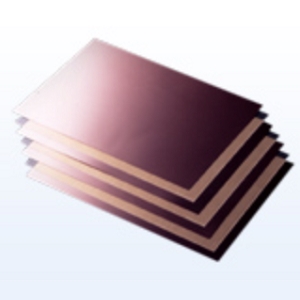
Elite Material Co.,Ltd - EM-891K
- Type: Halogen-free
- Dk: 3.0 to 3.2
- Df: 0.0024 to 0.0032
- Td: 400 ˚C
- Tg: 170 to 205 ˚C
- Frequency: 1 to 10 GHz
- UL: yes
Panasonic Corporation - HIPER M R-1755M
- Dk: 4.6
- Df: 0.014
- Tg: 153 ˚C
- Frequency: 0 to 1 GHz
- Cte xy: 11, 13 ppm/˚C
- Cte z: 13, 15 ppm/˚C
- Industry application: Automotive

Rogers Corporation - CuClad 217
- Type: Copper-clad
- Df: 0.0009
- Td: 100 ˚C
- Frequency: 25 GHz
- Arc resistance: 180 Sec
- Cte xy: 29, 28 ppm/˚C
- Cte z: 246 ppm/˚C

AGC Inc - TRF-43
- Dk: 4.3
- Df: 0.0035
- Frequency: 0 to 10 GHz
- Lead Free: yes
- Cte xy: 9, 9 ppm/˚C
- Cte z: 40 ppm/˚C
- Flamibility: UL-94 V-0
Elite Material Co.,Ltd - EM-891
- Type: Halogen-free
- Dk: 3.2 to 3.8
- Df: 0.0035 to 0.0054
- Td: 400 ˚C
- Tg: 170 to 205 ˚C
- Frequency: 1 to 10 GHz
- UL: yes
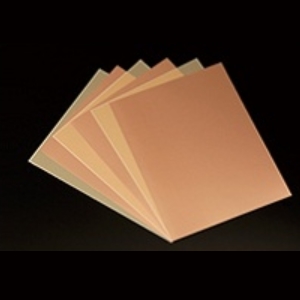
Panasonic Corporation - MEGTRON7 R-5785(N)
- Type: Copper-clad
- Dk: 3.4
- Df: 0.002
- Tg: 200 ˚C
- Frequency: 0 to 12 GHz
- Cte z: 42, 280 ppm/˚C
- Industry application: Aerospace and defence, Telecom
Rogers Corporation - RO4725JXR
- Type: Copper-clad
- Td: 439 ˚C
- Tg: 280 ˚C
- Frequency: 10 GHz
- Lead Free: yes
- Cte xy: 13.9, 19.0 ppm/˚C
- Cte z: 25.6 ppm/˚C

AGC Inc - HF-340
- Td: 561 to 815 ˚C
- Tg: 536 ˚C
- Frequency: 2 to 10 GHz
- Lead Free: yes
- Cte xy: 12, 18 ppm/˚C
- Cte z: 45 ppm/˚C
- Industry application: Aerospace and defence, Telecom
Elite Material Co.,Ltd - EM-37B(Z)
- Type: Halogen-free
- Dk: 3.8 to 4.4
- Df: 0.012 to 0.019
- Td: 390 ˚C
- Tg: 190 to 210 ˚C
- Frequency: 1 to 10 GHz
- UL: yes
How to Build Your PCB Stackup
Many PCBs will not function properly without the right dielectric materials as these influence EMI, signal integrity, and power integrity. The other dimension to consider on many mass-produced products is cost, as material selection will be a major factor determining volume production expense. To start building your own PCB stackup, follow these steps:
- Prioritize your specifications - All PCB laminate materials come with tradeoffs, requiring a balance among cost, dielectric properties, and thermal reliability. Start by determining the important specifications before selecting material sets and planning your PCB layer assignments.
- Review materials datasheets - Once base materials are selected, review the material datasheets, consult a PCB design services firm, or consult a PCB manufacturer for more information on use cases and laminate thickessness for you selected material set.
- Check with your fabricator - Before finalizing your stackup design, have the design reviewed by a competent fabrication house. Hyrid PCB stackups builds, HDI PCB materials, thin PTFE laminates, and metal-core or ceramics all require special processing during fabrication to ensure reliability.
The typical stackup arrangement shown below illustrates the stackup design approach and layer assigments in many commercial products. In between each of the signal/plane layer groups, additional signal layers may be present as needed, often being used to route important high-speed signals or large copper pours for power routing.

Getting Started
We help customers define specialized PCB materials and stackups early so new designs can move into layout with clear fabrication targets.- Contact us for a consultation and quote.
- Send your project requirements, including schematics, stackup targets, interfaces, thermal needs, and any preferred materials.
- We review materials selection, fabrication limits, and performance requirements for your application.
- We work with your team to refine stackup, layout, and documentation for fabrication readiness.
Why Work With NWES?
- Broad expertise - We're a digitally-driven remote-first organization with diverse talent and experience. We know your technology because we've used it and built it.
- Manufacturing partners - We work with local and overseas CMs and EMS providers that are ISO-9001, AS9100, ISO-13485, IPC-A-610, NADCAP, and/or ITAR/JCP certified. We help you find the best option to produce prototypes and scale to volume production.
- Supply chain management - We take a proactive approach on projects to ensure your design can be produced at the required volume. We'll manage procurement from major distributors or brokers throughout your project.

Need a hand with a current or future PCB design project? Find out the difference our experts can make.
Contact us today for more information.
Our Clients and Partners